
One of the most common questions I hear from local business owners is some version of “Can I afford SEO? How long will it take to see results? Is it even worth it for a business like mine?”
I get it. SEO can feel like a black box. It may seem expensive, slow, and hard to measure. But local SEO is different. For businesses that serve a specific area, whether that’s a city, a region, or a service radius, there are a handful of high-impact actions that don’t require a big budget or a technical overhaul.
Most modern websites built on platforms like Squarespace, Wix, Webflow, or WordPress already have a solid technical foundation. The work isn’t rebuilding from scratch. It’s adding the right context on top so Google, and increasingly AI tools like ChatGPT and Google AI Overviews, have a clear picture of what you offer, where you offer it, and why you can be trusted.
Here are the three places I tell every local business client to start with their SEO efforts.
1. Start With Google Maps (Even Before Your Website)
If you do nothing else for your local SEO, claim and optimize your Google Business Profile. This is the listing that powers Google Maps, and it is the single highest-impact thing a local business can do to build visibility on Google.
Here is why it matters so much: Google Maps results appear above organic search results for any search with local intent. When someone searches for a plumber, a hair salon, or a landscaper in their area, the map with three business listings is the first thing they see. Getting into that map pack puts you in front of people who are actively looking for exactly what you offer.
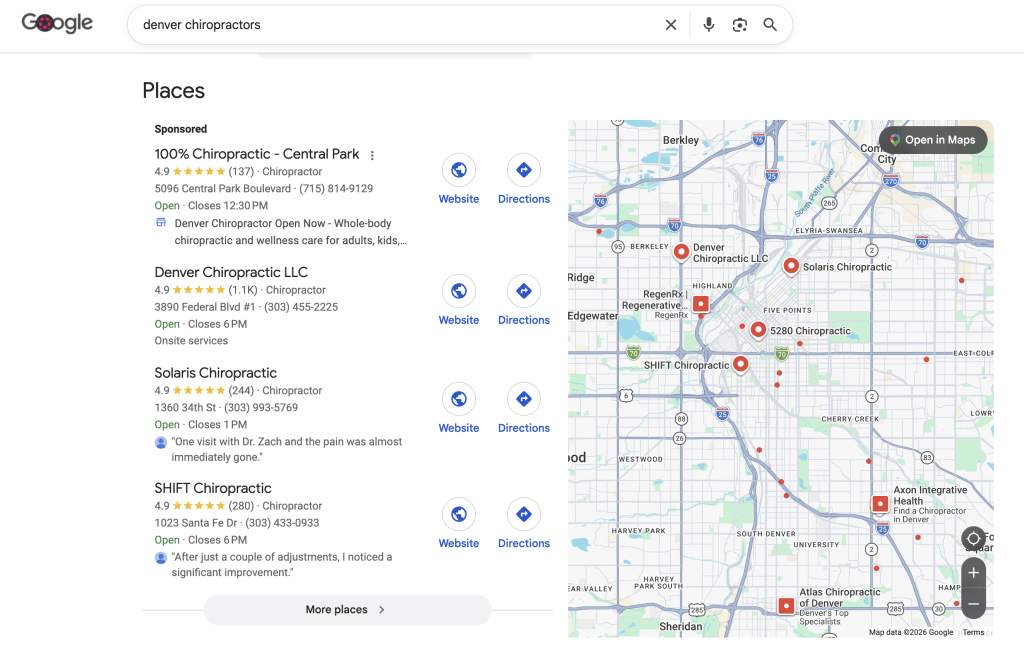
And here is the part that surprises most people: you do not need a physical storefront to have a Google Business Profile. If you serve customers at their location (for example, a cleaning service, a contractor, a mobile pet groomer), you can hide your physical address and set up a service area.
Google Maps levels the playing field in search. A one-person landscaping company with a well-optimized Google Business Profile can outrank a national home services chain.
To get the most out of your profile, make sure the basics are complete and accurate, including your business name, category, service area or address, phone number, hours, and a clear description of what you offer and where. Add photos. Keep it updated.
One more thing worth knowing. Your Google Business Profile feeds information directly to AI tools like ChatGPT and Google AI Overviews. A complete, well-maintained profile is not just good for Google Maps; it is part of how AI engines build a picture of your business when someone asks for a local recommendation.
2. Make Sure Your Website Is Clear About What You Offer and Where
Once your Google Business Profile is in order, turn your attention to your website. You don’t need to rebuild it. You just need to make sure Google has enough context to understand your business.
The most important question to ask is, “If someone landed on any page of my website, would they immediately know what I do, where I do it, and who I serve?”
For most local businesses, the answer is not as clear as it should be. Here are the key places to check:
- Homepage. This is where Google forms its first impression of your business. Your homepage should clearly state what you offer and where you offer it. Phrases like “Plumbing services in Denver, Colorado” or “Yoga studio serving Boulder and the surrounding area” give Google the context it needs to show your business to the right people.
- Contact page. This is one of the most underleveraged pages on a local business website. Include your full address if you have a physical location, or clearly describe your service area if you don’t. “We serve clients across the greater Phoenix area” is simple and effective. Your phone number, email, and hours should also be easy to find here.
- About page. This is where you tell your story and establish credibility. Ground it in location from the start. “Based in Asheville, North Carolina…” or “Serving homeowners across the Seattle area since 2012…” signals to both Google and your visitors that you are a local business with real roots in the community.
These are small, targeted copy updates. In most cases, you can make these changes yourself directly in your website platform.
And just like your Google Business Profile, the clarity you add to your website helps AI tools too. When ChatGPT or Google AI Overviews gets asked for a local recommendation, it pulls from the same signals (clear location, services, and expertise). A website that answers those basics confidently is one that AI engines can recommend with confidence.
3. Build Trust With Reviews
If your Google Business Profile anchors your business to a place, and your website explains what you do and where, reviews are what convince people, Google, and AI engines that you are worth choosing.
Reviews are third-party validation. They tell Google and your potential customers that real people have had real experiences with your business. For local search, they are one of the strongest trust signals you can build.
Google Maps reviews are the most important place to start. When your listing appears in the map pack, the first things a searcher notices are your star rating and the number of reviews you have. A business with 40 reviews and a 4.8 rating will get more clicks than one with 3 reviews and no written feedback, even if the services are identical.
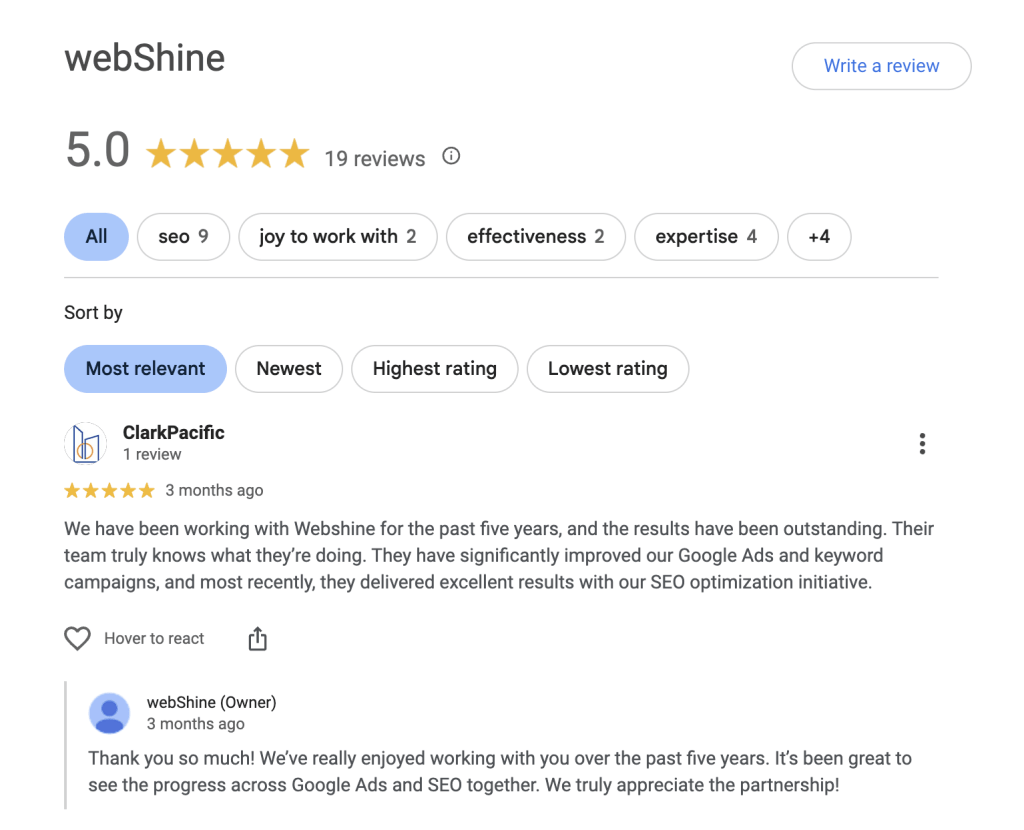
But the quality of reviews matters as much as the quantity. A review that describes a specific experience carries far more weight than a generic five-star rating with no text. When a customer writes, “Maria completely transformed our overgrown St. Louis backyard in one afternoon and was incredibly professional throughout,” that tells Google something meaningful about what your business does and how well it does it. Encourage your customers to be specific when they leave a review.
The simplest way to get more reviews is to ask. Most happy customers are willing to help when you make it easy. Send a follow-up message after a job is complete with a direct link to your Google Business Profile review page. A short, personal ask works better than a generic automated email.
Once you have reviews, bring them onto your website too. A dedicated reviews or testimonials page, or even a simple section on your homepage, adds another layer of credibility for visitors who find you through search. It also gives AI tools like ChatGPT and Google AI Overviews additional signals about your reputation, since they pull from your website content as well as third-party sources.
Finally, respond to your reviews. Thank customers who leave positive feedback. Address negative reviews calmly and professionally. Consistent engagement signals to Google that your business is active and attentive, which supports your local ranking over time.
Where to Go From Here
These three steps are where I tell local business clients to start. They are high-impact, foundational, and build the visibility that everything else in local SEO grows from.
And they are just the beginning. Once the foundation is in place, there is a deeper layer of SEO work that compounds your results over time: expanding your content, building authority, optimizing for AI search, and staying ahead of how search continues to evolve.
At webShine, we offer one-time projects designed to accelerate local businesses through the foundation and beyond. We assess where you stand, identify the highest-impact opportunities, and do the work, so you can focus on running your business.
Schedule a discovery call to learn more.